Treatments Explained
Dry Needling vs. Massage: What's the Difference?
By Norfolk Physical Therapy · · 3 min read
If you've got a tight, painful muscle that just won't let go, you've probably tried stretching, foam rolling, or massage. Maybe they helped for a while, but the knot always seems to come back. That's when many people start asking about dry needling.
Here's how dry needling compares to massage, and how to tell which one might be right for you.
What is massage?
Massage uses the hands to apply pressure and movement to muscles and soft tissue. It can relax tight muscles, improve circulation, and reduce stress. Massage generally works from the surface inward and is great for general relaxation and tension relief.
What is dry needling?
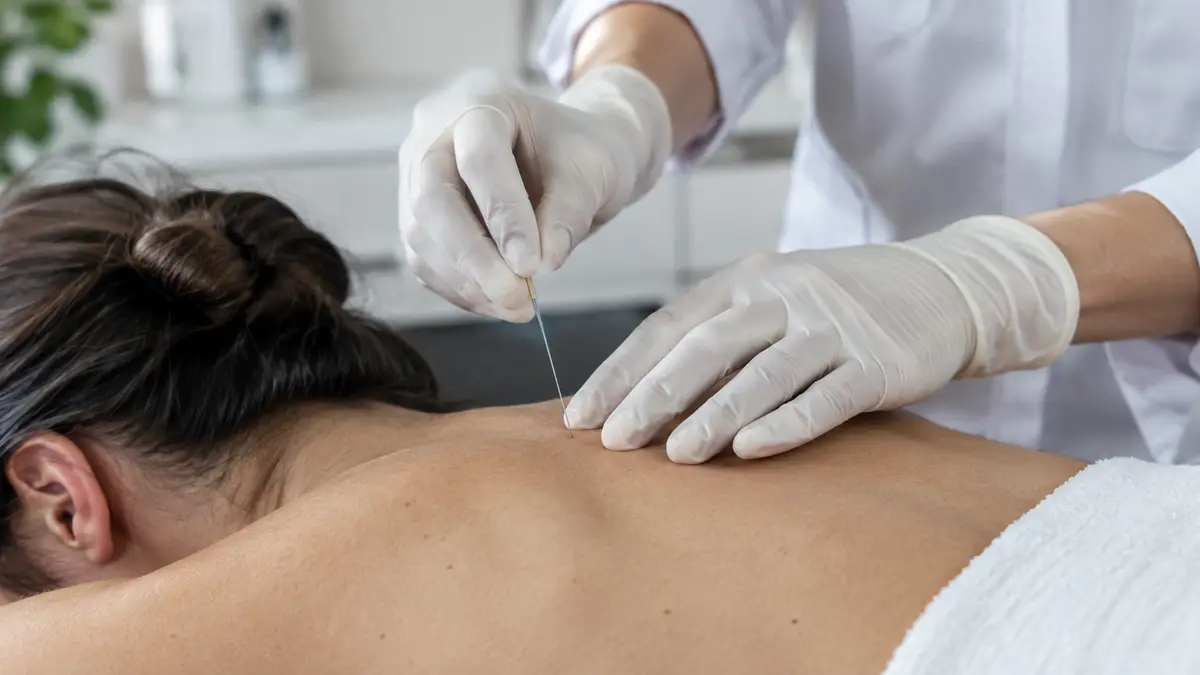
Dry needling uses a very thin, solid, sterile needle inserted through the skin into a specific trigger point — a tight, irritable band within a muscle. It's called "dry" because nothing is injected.
When the needle reaches a trigger point, the muscle often responds with a brief twitch. That twitch is usually followed by the muscle relaxing. Many patients notice:
- Less pain in the area
- Improved range of motion
- Better ability to activate and strengthen the muscle
Dry needling is based on Western anatomy and neuromuscular science. It's different from acupuncture, which is rooted in traditional Chinese medicine.
The key differences
| Massage | Dry needling | |
|---|---|---|
| Tool | Hands | Thin, sterile needle |
| Depth | Mostly superficial to moderate | Reaches deep trigger points directly |
| Goal | General relaxation, tension relief | Release specific trigger points |
| Part of a rehab plan? | Sometimes | Always, at Norfolk PT |
| Sensation | Pressure, relaxation | Brief prick, twitch, deep ache |
What does dry needling feel like?
Most people barely feel the needle go in. When it reaches a trigger point, you may feel a twitch or a deep ache — many patients describe it as a "good hurt." Afterward, the area may feel sore for a day or two, similar to after a hard workout.
Who benefits from dry needling?
Dry needling can help people with:
- Neck and shoulder tension
- Low back pain with muscle spasm
- Hip and buttock pain
- Headaches related to neck muscle tightness
- Tennis elbow and other tendon-related pain
- Muscle pain that limits strength or movement
It may not be appropriate for everyone. We screen for things like bleeding disorders, certain medications, pregnancy, and a strong fear of needles before recommending it.
Why dry needling works best as part of a plan
At Norfolk Physical Therapy, dry needling is never a stand-alone treatment. A trigger point is often a symptom of something else — weakness, poor posture, overuse, or a movement pattern that keeps overloading the muscle.
That's why we pair dry needling with:
- Manual therapy to improve joint and soft-tissue mobility
- Targeted exercise to strengthen and retrain the muscle
- Education on posture, work habits, and activity
When the muscle relaxes after needling, there's a window where it moves and activates better. We use that window right away with exercise so the change lasts.
Is it safe?
When performed by a trained physical therapist using sterile, single-use needles and proper technique, dry needling is considered safe. The most common side effects are temporary soreness and minor bruising.
Should you try dry needling or massage?
If you're looking to relax and unwind, massage may be all you need. If you have a specific, stubborn muscle problem that keeps returning, or pain that's limiting your movement, dry needling combined with physical therapy may get you further.
Learn more about dry needling at Norfolk Physical Therapy, or call (402) 371-9707 to schedule an evaluation.
This article is general education, not medical advice. Everyone's situation is different — talk with your physician or physical therapist about your symptoms. If you have a medical emergency, call 911.